Last updated: July 19, 2026
Quick Answer
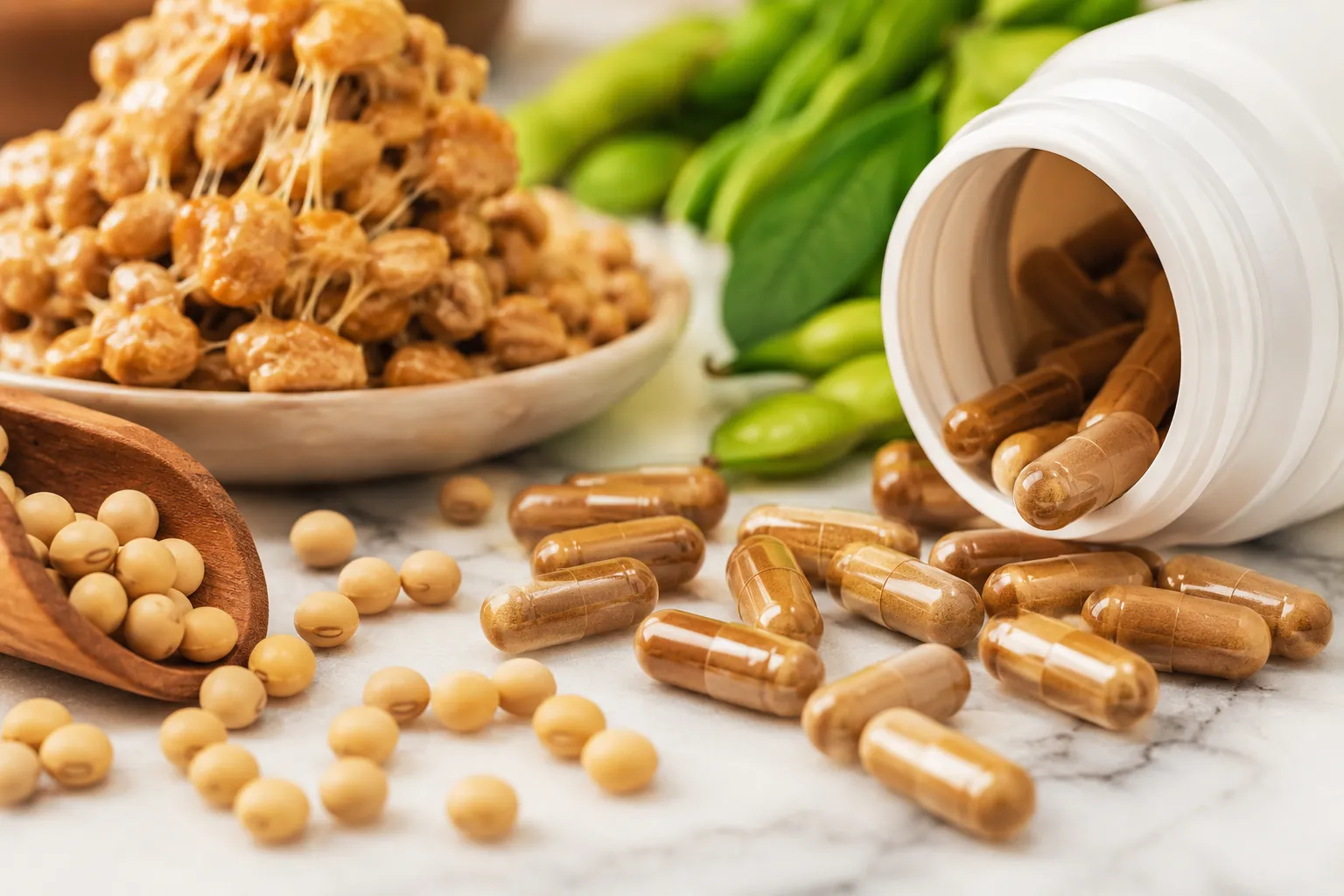
Dr NattoKinase refers to nattokinase-based dietary supplements, often branded or discussed in the context of physician-endorsed cardiovascular health products. Nattokinase is a natural enzyme extracted from natto, a fermented soybean food with over 2,000 years of use in Japan, and it works by helping the body break down fibrin, a protein that forms blood clots. [1] These supplements are used primarily to support healthy circulation, blood pressure, and clot management, but they require careful use around prescription blood thinners.
Key Takeaways
- Nattokinase is a fibrinolytic enzyme derived from fermented soybeans, discovered by Dr. Hiroyuki Sumi, who found it could dissolve blood clots in approximately 18 hours [1]
- Dr NattoKinase supplements are measured in Fibrinolytic Units (FU); a standard dose ranges from 2,000 to 4,000 FU per day [4]
- A 2015 randomized controlled trial found nattokinase significantly slowed coronary artery calcium progression over 26 weeks compared to placebo [3]
- A 2022 meta-analysis of 12 randomized controlled trials confirmed reductions in LDL cholesterol, triglycerides, and fibrinogen levels [3]
- Nattokinase should NOT be combined with warfarin, aspirin, or other anticoagulants without physician supervision due to additive blood-thinning effects [2]
- People with bleeding disorders, those scheduled for surgery, or pregnant women should avoid nattokinase supplements [6]
- The best time to take nattokinase is on an empty stomach, at least 30 minutes before or two hours after a meal [5]
- High-quality formulas are typically non-GMO, free from wheat, corn, dairy, and artificial additives [7]
- Results may take four to eight weeks of consistent use to become noticeable for most cardiovascular markers
What Is Nattokinase and How Does It Work
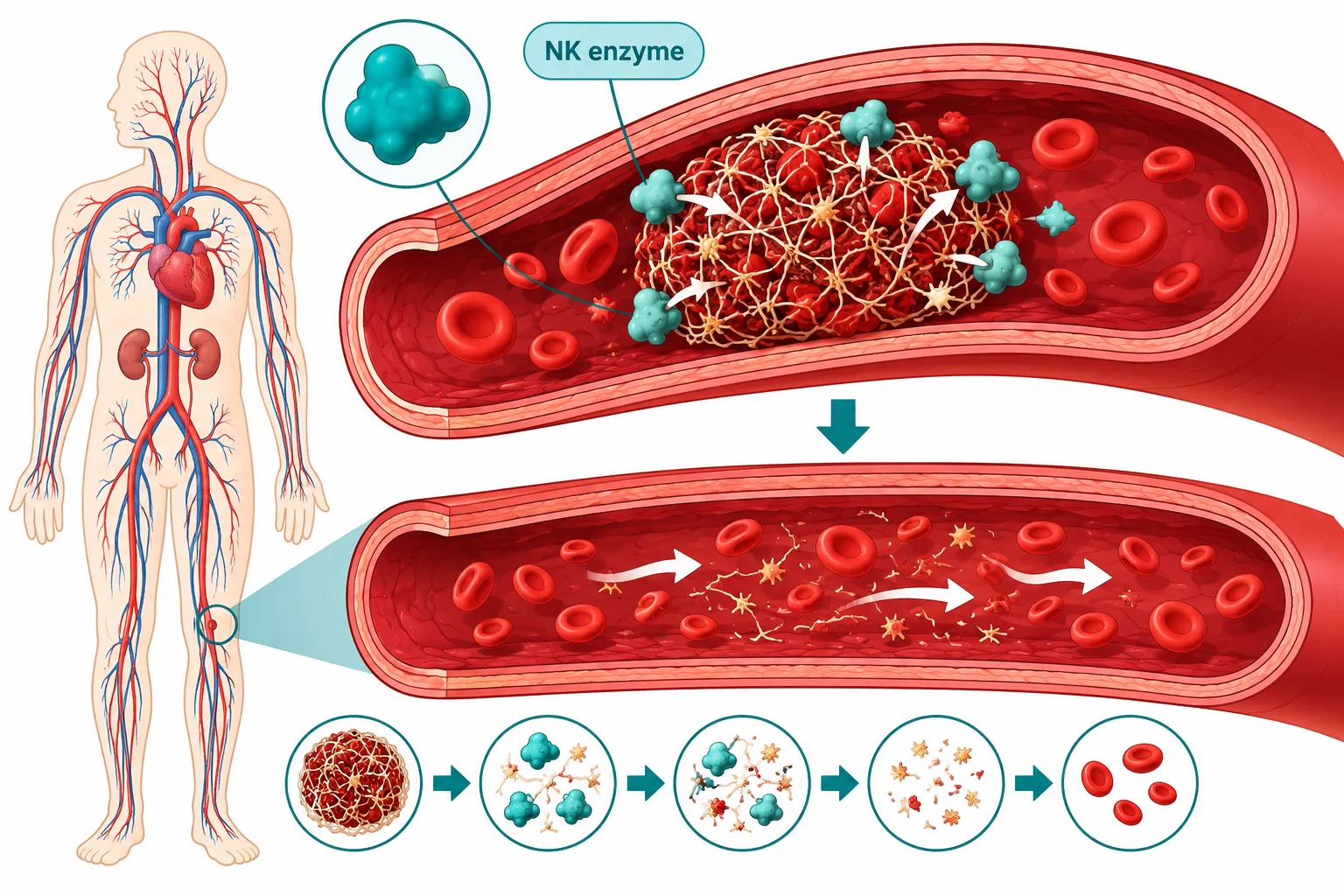
Nattokinase is a serine protease enzyme produced during the fermentation of soybeans with the bacterium Bacillus subtilis natto. It works by directly cleaving fibrin, the structural protein in blood clots, and by inactivating plasminogen activator inhibitor-1 (PAI-1), a compound that normally suppresses the body’s natural clot-dissolving system. [6]
In practical terms, this dual action makes nattokinase more effective at promoting clot breakdown than many single-mechanism approaches. When PAI-1 is suppressed, the body’s own plasmin system becomes more active, which supports ongoing fibrinolysis (the natural process of dissolving clots).
How it differs from other enzymes:
- Unlike serrapeptase, nattokinase has direct fibrinolytic activity rather than relying solely on anti-inflammatory pathways
- Unlike pharmaceutical thrombolytics (clot-busting drugs), nattokinase is taken orally and acts more gradually
- It also appears to reduce blood viscosity, which supports overall circulation [2]
Does Nattokinase Really Dissolve Blood Clots
Nattokinase has demonstrated fibrinolytic (clot-dissolving) activity in laboratory and clinical settings, though it is not a substitute for emergency medical treatment of acute clots. Dr. Hiroyuki Sumi’s original discovery showed that natto could dissolve an artificial blood clot completely within about 18 hours at body temperature. [1]
Clinical evidence adds important context:
- A 2015 randomized controlled trial found that nattokinase supplementation significantly reduced coronary artery calcium progression over 26 weeks, suggesting reduced arterial plaque buildup [3]
- A 2022 meta-analysis confirmed measurable reductions in fibrinogen, a clotting protein, across 12 randomized controlled trials [3]
Important edge case: Nattokinase is not appropriate as a standalone treatment for diagnosed deep vein thrombosis (DVT), pulmonary embolism, or stroke. Anyone with a confirmed clot diagnosis needs immediate medical care. Nattokinase is best positioned as a preventive cardiovascular support supplement, not an acute therapy.
Nattokinase for Heart Health Benefits
Nattokinase supports heart health through several distinct mechanisms beyond clot dissolution. Research shows it helps maintain normal blood viscosity, reduces LDL cholesterol, lowers triglycerides, and may modestly reduce blood pressure. [3]
Documented cardiovascular benefits from clinical research:
- Reduced LDL cholesterol and triglycerides (confirmed in 2022 meta-analysis of 12 RCTs) [3]
- Slowed coronary artery calcium progression (2015 RCT, 26-week duration) [3]
- Reduced fibrinogen levels, which lowers clotting risk [3]
- Improved circulation through lower blood viscosity [2]
Dr. Eric Berg has noted nattokinase’s potential to decrease blood pressure and improve circulation, and has also highlighted its ability to break down mucus, which may benefit people with sinus congestion or respiratory mucus buildup. [2]
Dr NattoKinase Brand Reviews and Ratings
Several supplement brands market nattokinase products under physician-endorsed or “Dr” branding. Dr’s Hope Nattokinase 4K is one example, offering 4,000 Fibrinolytic Units (FU) per capsule, which is at the higher end of standard dosing. [4] Their formula is made from non-GMO natto and is free from added sugars, salt, yeast, wheat, corn, milk, preservatives, and artificial colors. [7]
What to look for in a quality Dr NattoKinase supplement:
- Potency listed in FU (Fibrinolytic Units), not just milligrams
- Non-GMO soybean source
- Third-party tested or verified for purity
- Free from common allergens (wheat, dairy, corn)
- No artificial additives or preservatives
Common complaint in reviews: Some users report mild digestive discomfort when taking nattokinase with food rather than on an empty stomach. Following the recommended timing (30 minutes before meals) typically resolves this.
Nattokinase Dosage Recommendations Per Day
The standard nattokinase dosage is 2,000 FU per serving, with most protocols calling for one to two capsules taken twice daily. [5] Higher-potency products like those providing 4,000 FU per capsule may require only one capsule per day depending on the individual’s cardiovascular goals. [4]
General dosage guidance:
- Preventive cardiovascular support: 2,000 to 4,000 FU per day
- Active circulation support: up to 4,000 FU twice daily, under physician guidance
- Always follow the specific product’s label instructions
Choose lower doses if: you are new to nattokinase, are older, or have any bleeding risk factors. Start at the minimum effective dose and assess tolerance over two to four weeks before increasing.
Best Time of Day to Take Nattokinase
Nattokinase should be taken on an empty stomach for best absorption and effectiveness. The recommended window is at least 30 minutes before a meal or two hours after eating. [5]
Taking it with food, particularly protein-rich meals, may reduce its fibrinolytic activity because digestive proteases can partially degrade the enzyme before it reaches systemic circulation. Many practitioners suggest taking it first thing in the morning or before bed, both of which are natural fasting windows.
Nattokinase vs Other Blood Thinners: Key Comparison
Nattokinase is not a pharmaceutical blood thinner, but it has measurable anticoagulant effects that place it in a similar functional category for preventive use.
| Factor | Nattokinase | Warfarin | Aspirin |
|---|---|---|---|
| Source | Natural enzyme (fermented soy) | Synthetic pharmaceutical | Synthetic pharmaceutical |
| Mechanism | Fibrin degradation, PAI-1 inhibition | Vitamin K antagonist | Platelet aggregation inhibitor |
| Monitoring required | Not typically required | Regular INR blood tests | Minimal |
| Prescription needed | No | Yes | No (OTC) |
| Bleeding risk | Low to moderate | High | Moderate |

Choose nattokinase if: you are looking for preventive cardiovascular support and are not currently on prescription anticoagulants. Do not use it as a replacement for prescribed medication without medical supervision.
Is Nattokinase Safe to Take With Warfarin or Aspirin
Nattokinase should not be combined with warfarin, aspirin, or other anticoagulant or antiplatelet medications without explicit physician approval. Because nattokinase has its own blood-thinning effects through fibrin degradation and PAI-1 inhibition, combining it with these drugs creates an additive risk of excessive bleeding. [2] [6]
This is one of the most commonly overlooked safety concerns with Dr NattoKinase supplements. People who are already on blood thinners for atrial fibrillation, DVT, or post-surgical recovery face real bleeding risk if they add nattokinase without medical guidance.
If you take warfarin: Do not add nattokinase without consulting your prescribing physician. The combination can unpredictably alter your INR levels.
If you take low-dose aspirin: Discuss with your doctor. The risk is lower than with warfarin but still present, particularly at higher nattokinase doses.
Who Should Not Take Nattokinase Supplements
Nattokinase is generally safe for healthy adults, but several groups should avoid it or use it only under medical supervision. [6]
Do not take nattokinase if you:
- Are currently taking warfarin, heparin, or other prescription anticoagulants
- Have a diagnosed bleeding disorder (such as hemophilia)
- Are scheduled for surgery within two weeks
- Are pregnant or breastfeeding (insufficient safety data)
- Have had a recent hemorrhagic stroke
- Have a known soy allergy (the enzyme is derived from fermented soybeans)
Use with caution if you: are over 70, take daily aspirin, or have a history of gastrointestinal bleeding.
Nattokinase Side Effects and Interactions
Most people tolerate nattokinase well. Reported side effects are generally mild and dose-dependent. [2]
Common side effects:
- Mild digestive discomfort (especially when taken with food)
- Nausea at higher doses
- Rarely, headache or dizziness
Serious interactions to watch for:
- Warfarin and other anticoagulants (increased bleeding risk)
- NSAIDs such as ibuprofen (additive platelet effects)
- Garlic, fish oil, and high-dose vitamin E supplements (additional blood-thinning effects when stacked)
How Long Does It Take Nattokinase to Work
Most users report noticeable changes in circulation-related symptoms within four to eight weeks of consistent daily use. Clinical trials measuring fibrinogen and lipid markers typically run for 12 to 26 weeks to detect statistically significant changes. [3]
Realistic timeline:
- Weeks 1 to 2: Minimal noticeable effects; enzyme is building systemic activity
- Weeks 4 to 6: Some users report improved energy, reduced leg heaviness, or better circulation
- Weeks 12 to 26: Measurable changes in cardiovascular markers such as fibrinogen, LDL, and triglycerides based on clinical data
How Much Does Dr NattoKinase Cost and Where to Buy It
Dr NattoKinase and similar nattokinase supplements are widely available online and in health food stores. Products like Dr’s Hope Nattokinase 4K are sold directly through brand websites and major e-commerce platforms. [4]
General price range (2026 estimates):
- Budget options (2,000 FU per capsule, 60 to 90 count): approximately $15 to $25 per bottle
- Mid-range (2,000 to 4,000 FU, higher purity, non-GMO): approximately $25 to $45 per bottle
- Premium physician-branded formulas (4,000 FU, third-party tested): approximately $40 to $60 per bottle
Where to buy: Brand websites (such as drshope.com), Amazon, iHerb, and specialty supplement retailers. Always purchase from reputable sources to ensure potency and purity standards are met.
Conclusion
Nattokinase is one of the more thoroughly researched natural enzymes for cardiovascular support, backed by clinical trials showing meaningful reductions in fibrinogen, LDL, triglycerides, and arterial calcium progression. Dr NattoKinase supplements offer a non-prescription option for adults looking to support healthy circulation and clot management, particularly those who prefer a food-derived approach.
Actionable next steps:
- If you are currently on warfarin, aspirin, or any prescription anticoagulant, speak with your physician before adding any nattokinase product.
- Start with a standard dose of 2,000 FU per day on an empty stomach and assess tolerance for two to four weeks before increasing.
- Look for products that list potency in Fibrinolytic Units, are non-GMO, and are free from common allergens.
- Set a 12-week benchmark to evaluate changes in relevant cardiovascular markers through routine lab work.
- Do not use nattokinase as a replacement for prescribed cardiovascular medications without direct medical guidance.
For most healthy adults without bleeding risk factors, Dr NattoKinase represents a well-supported, low-risk addition to a heart-health protocol when used correctly and consistently.
FAQ
What does “FU” mean on a nattokinase label? FU stands for Fibrinolytic Units, the standard measurement of nattokinase enzyme activity. Higher FU values indicate greater clot-dissolving potency. Milligrams alone do not tell you how active the enzyme is.
Can nattokinase replace warfarin? No. Nattokinase should never be used as a replacement for prescribed anticoagulants like warfarin without physician approval. It has a different mechanism and cannot be dosed or monitored the same way.
Is nattokinase safe for long-term daily use? Current evidence suggests nattokinase is safe for long-term use in healthy adults at standard doses. However, long-term studies beyond 26 weeks are limited, so periodic check-ins with a healthcare provider are advisable. [3]
Does nattokinase need to be refrigerated? Most nattokinase capsules are shelf-stable and do not require refrigeration, but should be stored in a cool, dry place away from direct sunlight. Check the specific product label for storage guidance.
Can people with soy allergies take nattokinase? Generally, no. Nattokinase is derived from fermented soybeans, which may trigger reactions in individuals with soy allergies. Consult an allergist before use. [6]
How is nattokinase different from serrapeptase? Both are proteolytic enzymes with anti-inflammatory and fibrinolytic properties, but nattokinase has stronger direct fibrinolytic activity and more clinical cardiovascular data. Serrapeptase is more commonly studied for its anti-inflammatory effects on soft tissue.
Does cooking destroy nattokinase? Yes. Nattokinase is heat-sensitive and is destroyed by cooking above approximately 50 degrees Celsius. This is why it must be consumed as a raw supplement or from uncooked natto, not from cooked soybean dishes.
Can nattokinase lower blood pressure? Some evidence and expert commentary suggest nattokinase may modestly reduce blood pressure, likely through improved circulation and reduced blood viscosity. [2] It should not replace prescribed antihypertensive medications.
References
[1] Nattokinase – https://drhui.com/disease_info/nattokinase/?utm_source=openai
[2] What Is Nattokinase – https://www.drberg.com/blog/what-is-nattokinase?utm_source=openai
[3] Nattokinase – https://holisticheartcenters.com/learn/guides/supplements/nattokinase/?utm_source=openai
[4] Nattokinase 4000fu Enzyme Heart Health – https://drshope.com/products/nattokinase-4000fu-enzyme-heart-health?utm_source=openai
[5] Nattokinase – https://www.ndformulas.com/products/nattokinase?utm_source=openai
[6] Nattokinase – https://en.wikipedia.org/wiki/Nattokinase?utm_source=openai
[7] Nattokinase Enzyme Heart Health Circulation – https://drshope.com/products/nattokinase-enzyme-heart-health-circulation?utm_source=openai